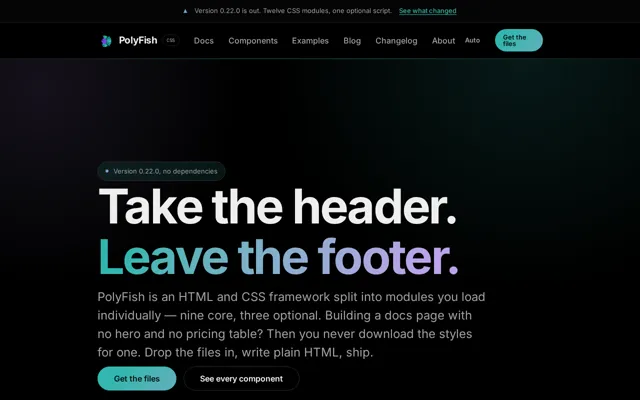
The homepage
Hero, module cards, live code and the layered footer — the marketing surface a framework site is judged on, without a custom stylesheet.
The bundle · Sudo theme
You are already looking at the largest PolyFish site: this one. Every page on it — the documentation you can search, the blog, the examples, the error pages — is styled by the same twelve modules you can download. What follows is a tour of what that proves.
Hero, module cards, live code and the layered footer — the marketing surface a framework site is judged on, without a custom stylesheet.
The bundle · Sudo theme

Sidebar navigation, global search, heading anchors and prev-next paging across nine pages — the pattern your own docs can lift whole.
The bundle · site.js
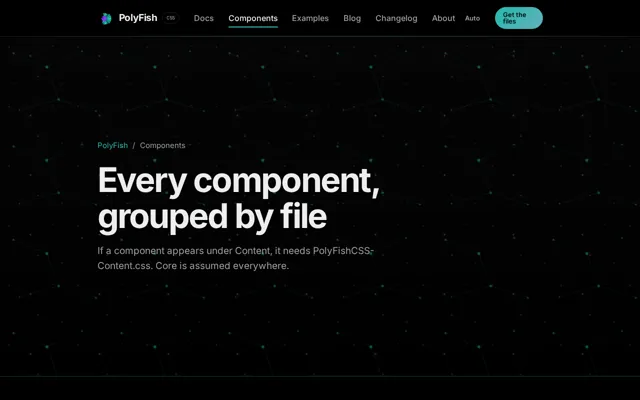
Every component rendered live and copyable — thirty-one demonstrations of the same classes you link, not a parallel demo stylesheet.
The bundle · site.css
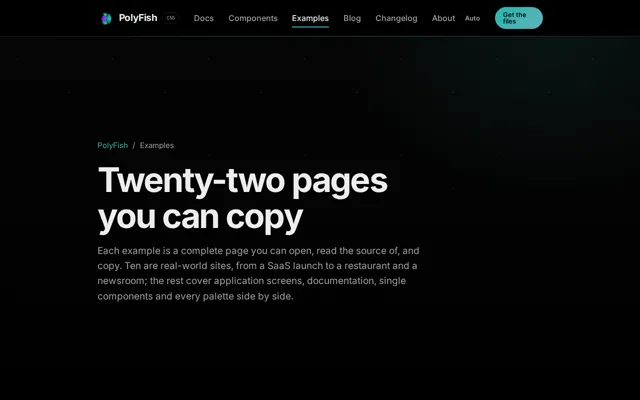
SaaS landing, restaurant, newsroom, dashboard, sign-in — complete pages in pf- classes alone, several on different themes.
Core + Content + Forms · themes
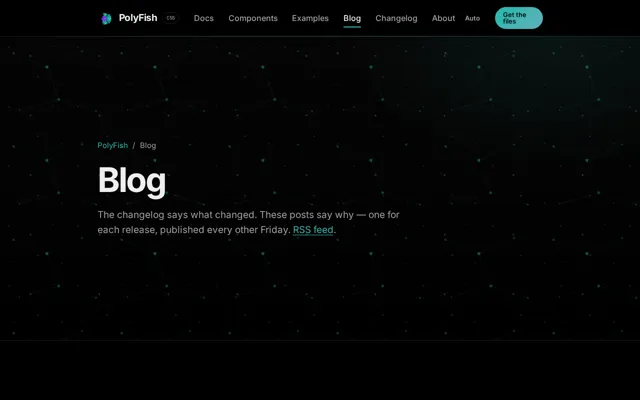
Measured prose, reading time, an Atom feed and a scroll-progress hairline done in a handful of lines of CSS.
The bundle · site.css
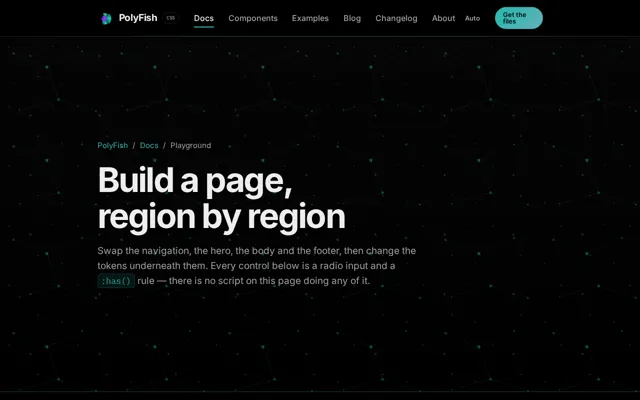
A live restyle of one page — accents, cut, radius, density — driven entirely by CSS :has(). The download button is the only JavaScript it needs.
The bundle · site.css
The palettes page renders identical HTML eleven times under eleven themes — the strongest
argument for role tokens: a theme file redeclares --pf-* values and never mentions
a component, so the same markup survives a re-skin untouched.
Even the error states carry the language: the 404 keeps the full navigation and a working docs search, and offline.html is what the service worker serves when the network is gone.
Built something on PolyFish? Open an issue or a pull request with the URL and a screenshot — a real site is worth a dozen demos, and this page is where it lands.